Altitude, Safety & Summit Success on Kilimanjaro
How altitude affects climbers, the warning signs that mean descend now, and why the number of days on the mountain decides who reaches Uhuru Peak.
Altitude
What thin air does to you above 3,000 metres
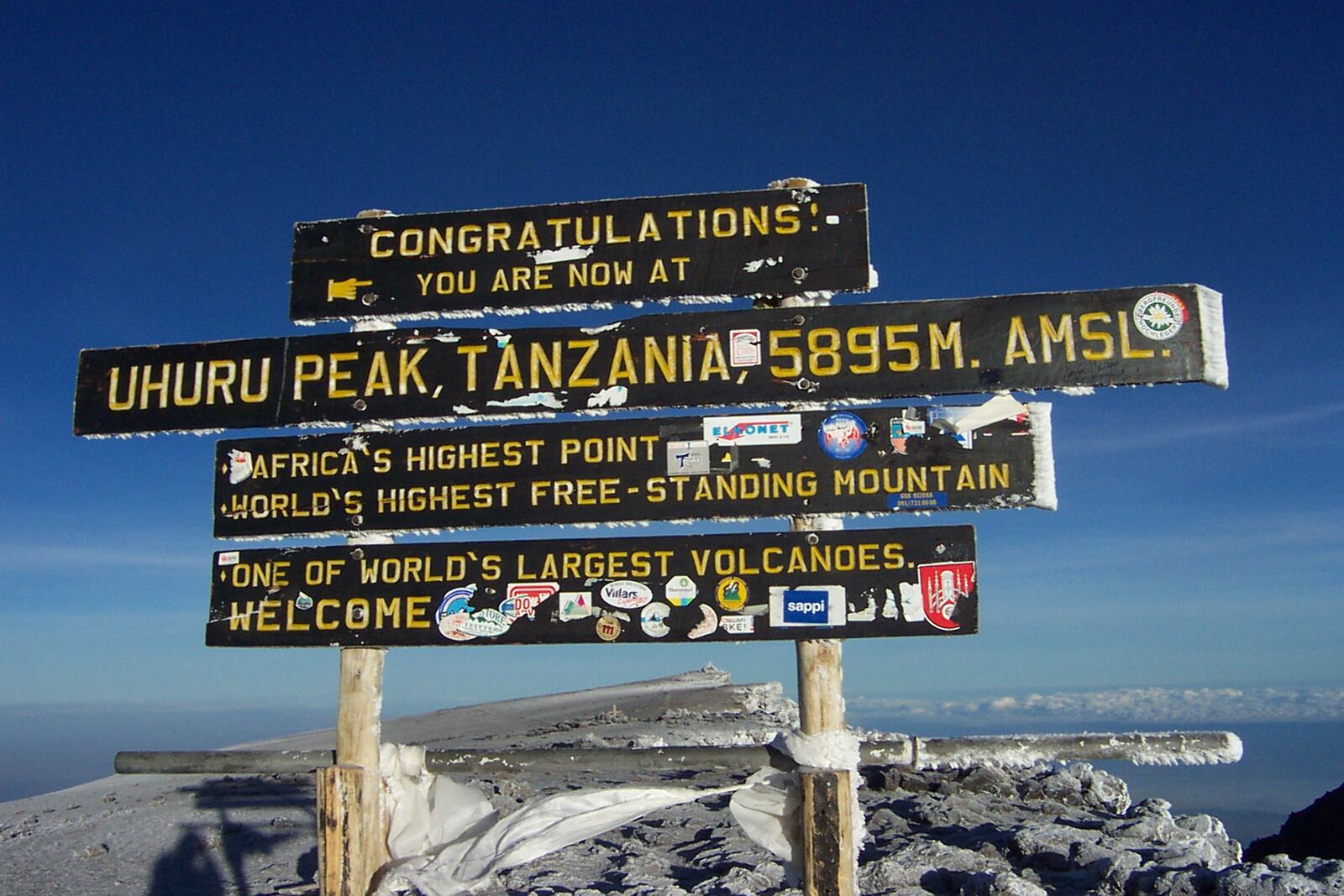
At Uhuru Peak the air holds roughly half the oxygen available at sea level. Your body compensates by breathing faster, raising your heart rate and eventually producing more red blood cells — but the last of those takes days, not hours, which is why acclimatisation is a matter of time on the mountain rather than fitness in the gym.
Most climbers feel something: a headache, broken sleep, loss of appetite, mild nausea, breathlessness on gentle slopes. That is acute mountain sickness in its mild form and it is manageable. What matters is recognising when mild becomes serious.
Warning signs
When to descend, immediately
Two conditions turn altitude illness from uncomfortable into life-threatening: high-altitude pulmonary oedema (fluid in the lungs) and cerebral oedema (fluid on the brain). Both are treated the same way — go down, fast.
- Severe headache unrelieved by painkillers
- Vomiting that prevents you drinking
- Breathlessness at rest, a wet cough or gurgling breathing
- Confusion, slurred speech or unusual behaviour
- Loss of coordination — inability to walk a straight line
- Bluish lips or fingertips
Prevention
What actually improves your odds
- Take more days. Seven or eight beats six, every time.
- Walk slowly. Pole pole is not a cliché; it is the single best piece of advice on the mountain.
- Drink 3–4 litres a day. Dehydration mimics and worsens altitude symptoms.
- Eat, even without appetite. Your body is burning 4,000+ calories a day.
- Climb high, sleep low where the itinerary allows it.
- Consider acetazolamide (Diamox). Discuss dosage with your doctor before you travel.
- Avoid alcohol and sleeping pills on the mountain.
Our protocol
How our guides monitor you
- Twice-daily pulse-oximeter and heart-rate checks, recorded on a health sheet
- Morning and evening symptom questionnaire (the Lake Louise score)
- Bottled emergency oxygen carried by the lead guide on every climb
- Guide-to-climber ratio of at least 1:2 so nobody walks alone
- Evacuation plan with park rescue and stretcher access from every camp
- Absolute authority for the guide to order descent — a decision no climber may override
Success rates
Days on the mountain versus summit odds
Published figures vary, but the pattern is consistent across operators: roughly 27% summit on five-day climbs, about 60% on six days, 85%+ on seven days and above 90% on eight-day Lemosho or Northern Circuit itineraries. Our own numbers follow that curve, which is why we do not sell five-day climbs.
Questions
Related questions
Does fitness prevent altitude sickness?
No. Fit climbers sometimes suffer more because they ascend too fast. Fitness makes the walking easier and helps recovery, but only time at altitude prevents altitude illness.
Should I take Diamox?
Many climbers do, typically 125 mg twice daily started a day or two before the climb. It genuinely helps acclimatisation but has side effects (tingling fingers, frequent urination). Discuss it with your doctor, not with the internet.
What happens if I have to turn back?
An assistant guide descends with you to a lower camp or the gate while the rest of the group continues. There is no extra charge for a guided descent — it is built into our crew ratios.
Is there a helicopter rescue on Kilimanjaro?
Helicopter evacuation is available from several points on the mountain through private providers, and is one reason we insist on insurance with high-altitude evacuation cover. Park rescue also operates stretcher and vehicle evacuation from the main camps.
Enquiry
Ready to turn this into a trip?
Send us your dates and we will build an itinerary around everything you have just read.
- Reply within 24 hours from our Arusha office
- Itineraries built around your dates, pace and budget
- Free quote, no deposit and no obligation
Email info@rutalegacysafaris.com
WhatsApp / Call +255 670 912 578 (0670 912 578 in Tanzania)
Keep exploring
You may also like
Lemosho Route — 8 Days
Our highest-success route — eight days, quiet western approach, superb views.
Read more →
Machame Route — 7 Days
The 'Whiskey Route': dramatic scenery, Barranco Wall and strong acclimatisation.
Read more →